Why Most People Overcomplicate Their First Business
My first real business idea involved a custom CRM platform with AI-powered lead scoring, an integrated marketing suite, automated reporting dashboards, and a mobile app. I spent four months on the business plan alone. I built exactly none of it.
You know what actually made me money that year? Helping a local business owner list three commercial properties. No app. No platform. No AI. Just me, a phone, and knowledge someone was willing to pay for.
That was the lesson. And I’ve watched dozens of smart people learn it the hard way since.
The Complexity Trap
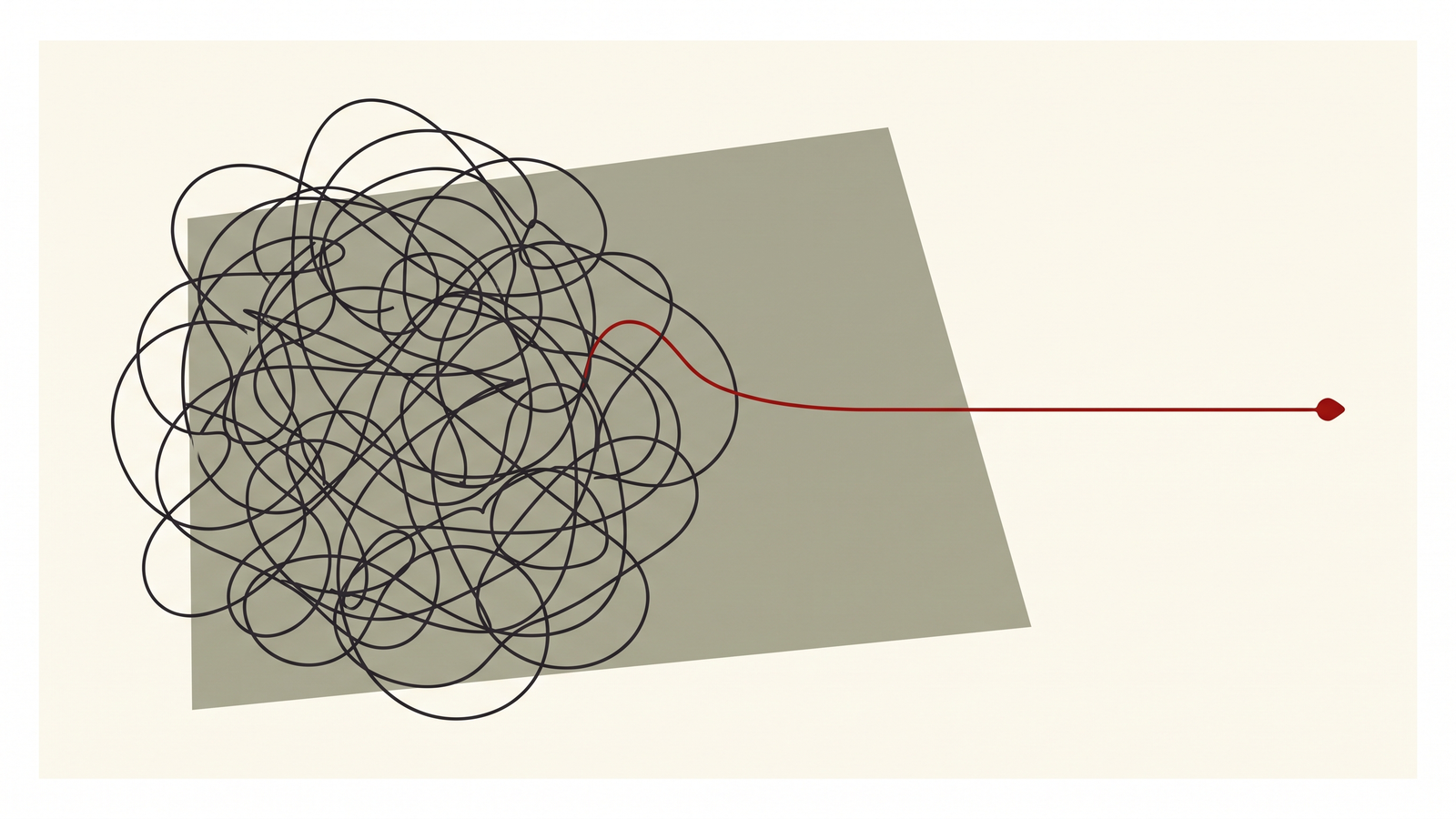
First-time entrepreneurs almost always overcomplicate things. I think it is because complexity feels like progress. If your business plan is 40 pages long, it must be serious. If your tech stack has six integrations, it must be sophisticated. If you spent three months on market research, you must be prepared.
But none of that is a business. A business is someone paying you money for something they value. That is it. Everything else is decoration.
I watched a friend spend $12,000 on a custom website with a booking system, payment processing, a blog, SEO optimization, and a customer portal. For a dog walking business. She had zero clients when the site launched.
She could have started with a phone number on a flyer at the local vet’s office. Cost: maybe eight dollars at Kinko’s.
Why Smart People Fall Hardest
This is the part that surprises people. It is not the naive entrepreneurs who overcomplicate things. It is the smart ones.
Smart people see connections everywhere. They think three steps ahead. They anticipate problems that do not exist yet and build solutions for scenarios that may never happen. All of that intelligence becomes a liability when you are starting something from zero.
I’ve seen MBAs spend months building financial models for a business that has not made a single dollar. Engineers building scalable infrastructure for an app with no users. Marketers crafting brand guidelines before they have a product to sell.
The pattern is always the same. Build the machine first, find the customers later. It almost never works that way.
What Actually Works
The businesses I have seen succeed, including my own, followed a boringly simple pattern.
Step one: find someone with a problem. Step two: solve it. Step three: get paid. Step four: do it again.
That is not a joke. That is literally the whole thing.
A guy I know in Kansas City started a pressure washing business in 2024. No website. No LLC at first. No business cards. He borrowed a pressure washer from his neighbor, knocked on doors in a nice neighborhood, and charged $150 per driveway. He did four driveways that first weekend.
By month three he bought his own equipment. By month six he had a truck and a helper. By the end of the year he was clearing $8,000 a month. He finally got a website around month nine. It was a single page.
Nothing about that story is exciting. Nobody is going to make a TED Talk about it. But it worked because he started with the smallest possible version of the idea and let complexity arrive naturally as the business demanded it.
The Things That Can Wait
If you are starting your first business, here is a short list of things that can wait.
A logo. I am serious. Your logo does not matter until people actually care who you are. Use your name in a clean font and move on.
A perfect website. A one-page site with what you do, who it is for, and how to contact you is enough for months. Maybe years.
An LLC. Talk to an accountant, but in most cases you do not need this on day one. Sole proprietorship works fine until you have real revenue and real liability exposure.
Business cards. Nobody has asked for my business card since 2022.
A social media strategy. Post when you have something to say. Do not manufacture content for platforms when you should be finding customers.
All of these things feel productive. That is what makes them dangerous. They give you the feeling of working on your business without the discomfort of actually selling something to someone.
The Real Blocker
The reason people overcomplicate their first business is not stupidity. It is fear.
Building a complex system feels safe because it delays the moment of truth. As long as you are still “building,” you do not have to face the possibility that nobody wants what you are selling. The business plan, the website, the brand identity, all of it is armor against rejection.
I know because I did exactly this. My four month business plan was not preparation. It was procrastination wearing a suit.
The fastest path through that fear is absurdly simple. Ask one person if they would pay for the thing you want to build. Not hypothetically. Actually ask. “Would you pay $X for this?” Their answer will tell you more than any business plan ever could.
Start Stupid Simple
If I were starting over today with zero dollars and zero reputation, here is what I would do. Pick one skill I have that other people find valuable. Find five people who need that skill. Offer to help them at a fair price. Use the money to do it better next time.
No app. No platform. No funding round. Just value exchanged for money, repeated until something bigger emerges.
The best businesses I know started embarrassingly simple. They got complicated later, when the complexity was earned. Not before.
Start simple. Stay simple as long as you can. Let the business tell you when it is time to add complexity.
It will. Just not on day one.